The cement and concrete industry is at a critical juncture in the global fight against climate change, striving to achieve net zero emissions through ambitious decarbonisation strategies. While initial progress has been made with traditional measures like efficiency improvements and fuel switching, deeper carbon reduction will require transformative technologies, such as carbon capture and kiln electrification. However, financing these innovations remains challenging because of fragmented markets, short-term contracts, and misaligned incentives across the value chain.
To address these barriers, the Global Cement and Concrete Association (GCCA) is developing a Book and Claim scheme that enables the concentration and monetisation of low-carbon attributes. This scheme leverages digital certificates and innovative accounting models, allowing environmental benefits to be traded and recognised throughout the value chain.
What is Book and Claim?
The GCCA Book and Claim scheme (also described as a Chain of Custody scheme) is being developed to help scale near-zero and low-carbon cement and concrete. It does this by separating the environmental attribute (the verified low-carbon footprint) from the physical product, so the attribute can be bought and claimed even when the physical cement or concrete is sourced locally from a different supplier.
This matters because the biggest emissions in concrete usually come from clinker production, and deep decarbonisation technologies are expensive to deploy. In many markets, the organisations that want low-carbon materials (asset owners, developers, public procurers) are not the same organisations that buy cement day to day. Book & Claim helps connect supply and demand by using tradable product certificates that represent verified emissions performance per tonne of clinker-equivalent.
Why the cement sector needs it now
The industry is committed to net‑zero concrete by 2050, but after efficiency, fuel switching and other incremental levers, deep‑decarbonisation levers such as CCUS are essential. These levers are also costly and have uncertain business cases. B&C provides a new revenue stream to make these projects investable.
Today, willing buyers are few (although growing) and geographically dispersed, impacts are diluted across long value chains, and procurement is complex; B&C connects decentralised demand with any verified supply, overcoming these barriers.
Other sectors already use similar models (RECs, SAF certificates); the SAF “book & claim” example shows how certificates enable credible claims even when physical logistics don’t match.
How it works (the essentials)
- Measure & verify the product carbon footprint (PCF) at the plant; quantify the CO₂ performance relative to an agreed baseline
- Issue certificates in a secure registry for that verified reduction— product carbon attributes, not credits
- Sell and retire certificates to buyers (direct and indirect customers, e.g., developers, procurers, financiers) who can claim the embodied‑carbon reduction for cement‑related Scope 3 use cases; no double counting
By unlocking investment and rewarding meaningful carbon reduction, the Book and Claim scheme aims to:

Make decarbonisation technologies investable across the value chain
To scale deep decarbonisation technologies, it is key to make them buyable – revenue streams can help to share the financial burden across the value chain

Strengthen and de-risk business cases for net zero investments
In absence of stronger regulation, business cases must be reinforced through levers such as demand aggregation or certification schemes

Enable supply where local demand falls short
By matching dispersed buyers with available supply, financial actors help build scale for low-carbon cement in otherwise hard-to-reach markets

Unlock a revenue stream for first wave of deep decarbonisation investments
Up-front certificate purchases could transfer early-stage case to producers, lowering capital cost and speeding deployment of carbon-capture projects
The GCCA is uniquely placed to drive a unified sector driven solution guaranteeing integrity and technical rigour.
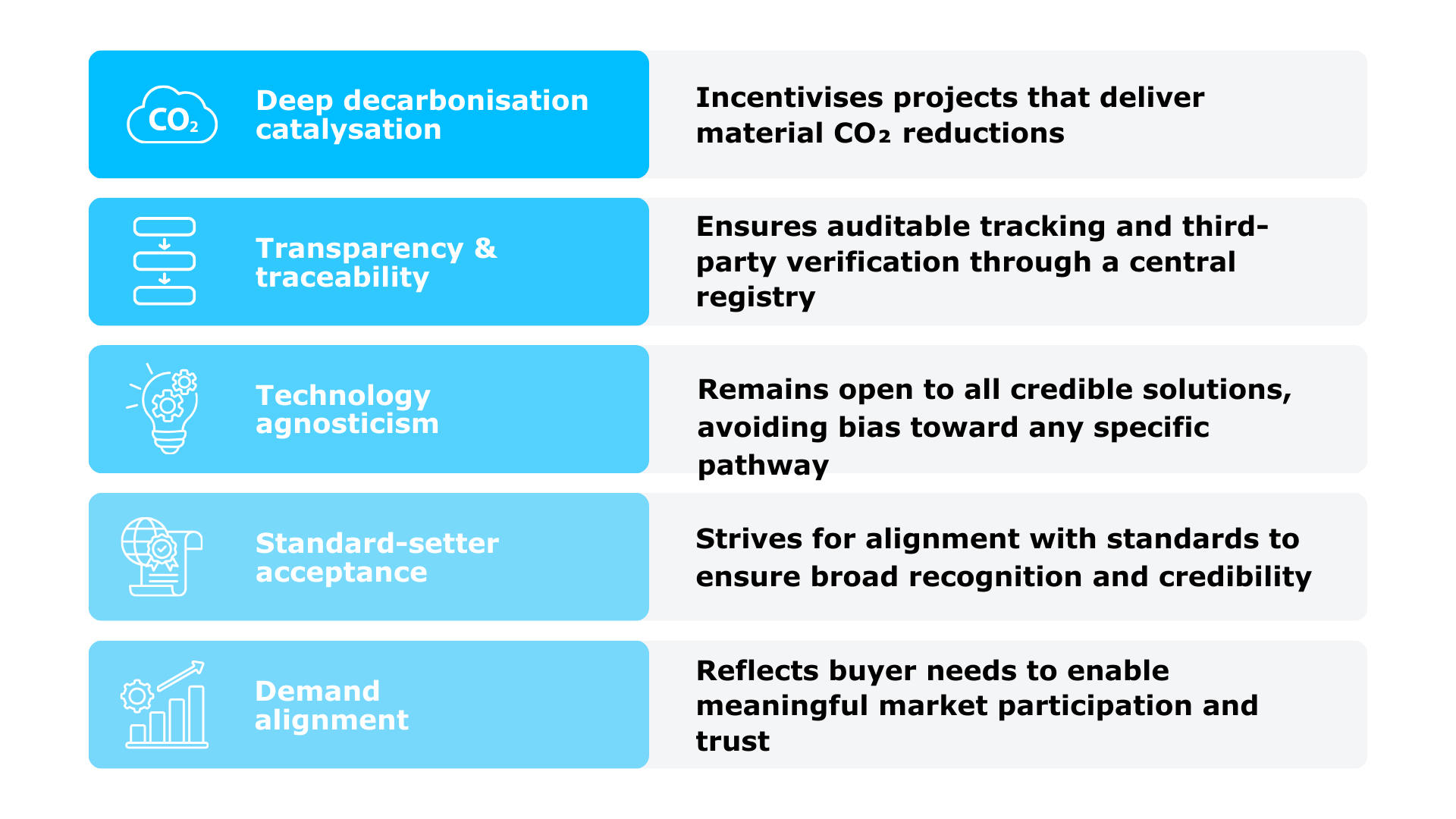
The GCCA Book and Claim scheme is defined around five strategic pillars:
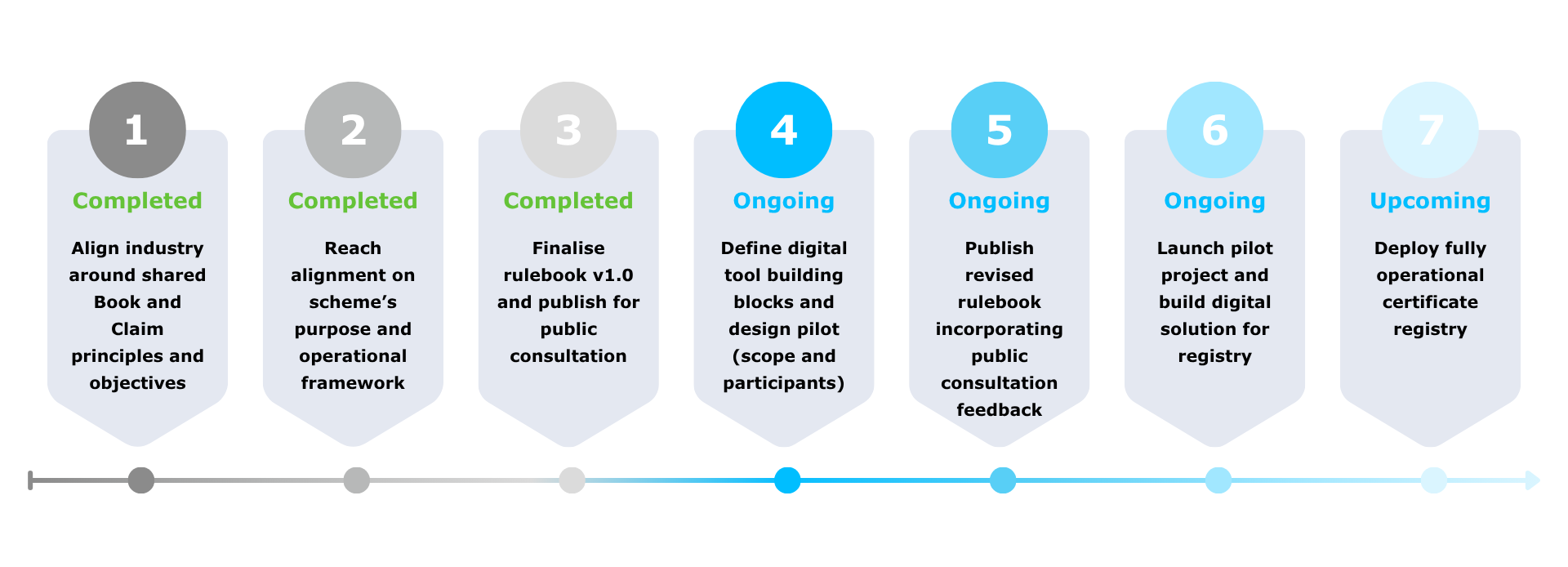
Timeline and next steps:
The GCCA Book and Claim scheme is currently under development. Below is a timeline that outlines the current and next steps towards launch.