Alternative Fuels in Cement Production
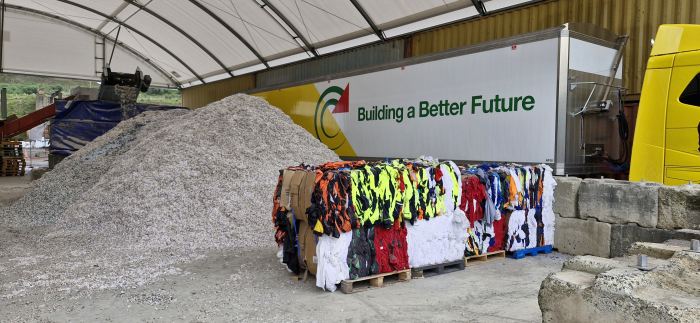
Golden Bay, New Zealand’s only fully integrated cement manufacturer, is on the road to 100% coal substitution. With alternative fuel total substitution rates exceeding 65%, the company is demonstrating how legacy operations can be transformed to deliver low-carbon solutions in the cement industry. This progress supports the New Zealand Concrete Association’s roadmap to Net Zero by 2050 and plays a pivotal role in diverting waste from landfill.
Golden Bay’s alternative fuels journey began in 2004 with the introduction of biomass to replace coal in the calciner. Today, biomass accounts for approximately 30% of the total fuel mix, with a large portion sourced from construction wood waste that would otherwise be destined for landfill.
In 2021, a significant leap forward was achieved with the incorporation of end-of-life tyres into the fuel strategy. With the objective of fully eliminating coal from the calciner, additional handling and feed equipment was installed, enabling chipped tyres to be used at substitution rates of up to 40%. This provides a consistent, high-temperature, and stable energy source. As a result, coal use for heating the back end has effectively been eliminated, marking a major milestone in the plant’s decarbonisation roadmap and increasing total coal substitution to 60%.
The current phase of the programme focuses on displacing coal from the main burner, which requires high-calorific waste streams. Since early 2025, Golden Bay has been feeding hard-to-recycle plastics, expired medical waste, light filmy plastics, and high-concentration industrial and commercial waste streams as main burner fuel. This has resulted in a consistent alternative fuel substitution rate of over 65%.
To support this next phase, Golden Bay has invested in new handling and feeding equipment tailored for front-end firing. This infrastructure enables the safe and efficient use of complex waste streams while maintaining fuel quality and kiln stability.