Moctezuma transforms waste into clean energy to advance toward a sustainable future
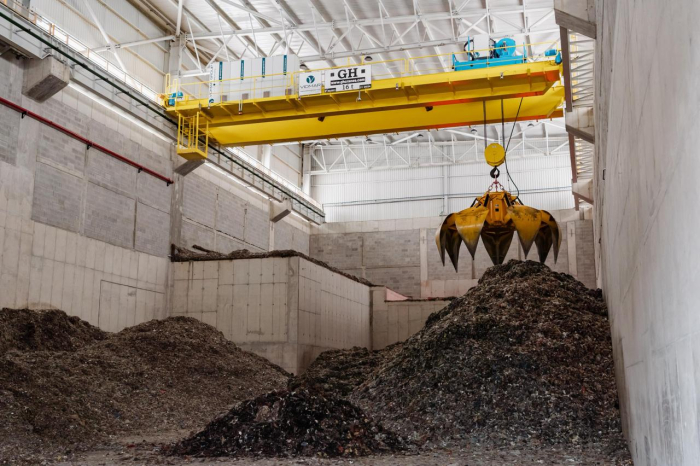
A strategic investment redefining the future of cement operations in Mexico
In recent years, Moctezuma has undertaken one of the most ambitious projects in its recent history: the design, construction, and implementation of a country-leading alternative fuels system capable of transforming waste into clean energy on a large scale. This infrastructure – installed at the Tepetzingo plant in Morelos – has become a national benchmark for applied innovation, circular economy practices, and sustainable management.
With an investment of MXN 240 million, the company has established an operational model that will enable it to process more than 150,000 tons of waste annually, significantly reducing its dependence on fossil fuels while promoting cleaner, more efficient, and more resilient production.
The Challenge: Turning a National Problem into an Energy Solution
Mexico generates millions of tons of waste that, without proper treatment, end up in landfills, open dumps, or bodies of water, causing pollution, fires, the spread of disease, and high-impact methane emissions.
Moctezuma identified a clear opportunity: to transform an environmental and social challenge into a cleaner energy source, aligned with its corporate goal of achieving a 30% substitution of fossil fuels by 2030 through the use of alternative fuels.
The Solution: State-of-the-Art Infrastructure with Immediate Impact
The new system implemented by Moctezuma includes the storage, handling, and transformation of waste into safe, high-efficiency green fuels. This infrastructure enables three specific actions:
- Processing 150,000 tons of waste annually, equivalent to the waste generated by more than 300,000 people.
- Utilizing end-of-life tires, inorganic fractions of municipal solid waste, and non-recyclable materials.
- Reducing fossil fuel consumption in cement production and lowering the operation’s carbon footprint.
Measurable Results: Environmental, Social, and Operational Benefits
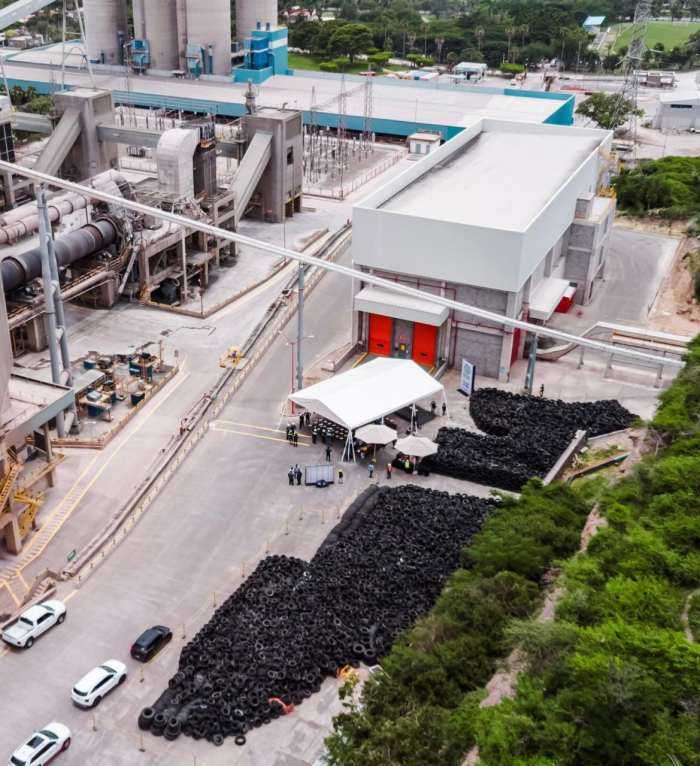
The project not only improves the plant’s energy efficiency but also delivers tangible benefits for the state of Morelos and the country as a whole.
Environmental Benefits
- Reduction of thousands of tons of waste sent to landfills, preventing methane emissions.
- Lower risk of fires caused by tire accumulation.
- Reduced dispersion of pollutants in natural environments, ravines, lakes, and urban areas.
Social Benefits
- Contribution to the prevention of diseases such as dengue and Zika by eliminating breeding grounds.
- Cleaner, safer urban environments.
- Reduced public health risks associated with improper waste disposal.
Operational Benefits
- Secured access to a stable alternative energy supply.
- Greater efficiency and resilience across the production chain.
- Key progress toward the company’s decarbonization roadmap.
Scaling the Model: Circular Economy Center in Jiutepec
The success of the Alternative Fuels System paved the way for a second phase: the creation of the Morelos Circular Economy Center, promoted by Moctezuma in partnership with the State Government and the Secretariat of Sustainable Development (SDS).
With an additional investment of MXN 30 million, the center will have the capacity to process up to 3,000 tons of tires per month through collection, shredding, and conversion into alternative fuels.
This initiative professionalizes the management of one of the country’s most challenging waste streams and transforms it into a valuable industrial energy input.
Conclusion: A Success Story Setting a New Industry Standard
Through this initiative, Moctezuma demonstrates that competitiveness, innovation, and sustainability can be effectively aligned while delivering high-impact environmental and social benefits.
The project is already positioned as a national success story in circular economy and energy recovery, and it further confirms Moctezuma’s leadership in the transition toward a low-carbon, efficient, and future-oriented industrial model.