At a time when the world’s resources are scarce and under increasing competition for how they are utilised, whether it is in industry and business or at a personal level, we all have to try and maximise the value and function out of the things we use.
From water to minerals, from agriculture and food to manufactured goods – it is a fundamental approach to being better custodians of our planet and it makes good sense to do so.
Co-processing is one of the ways that the Cement and Concrete Industry is at the forefront of responsible resource management.
By using the world’s non-recyclable waste as fuel for cement kilns, we are tackling the global challenge of non-recyclable and non-reusable waste through energy and mineral recovery.
The Challenge with Waste
Waste from human and industry activity is estimated to account for 11.2 billion tonnes every year*
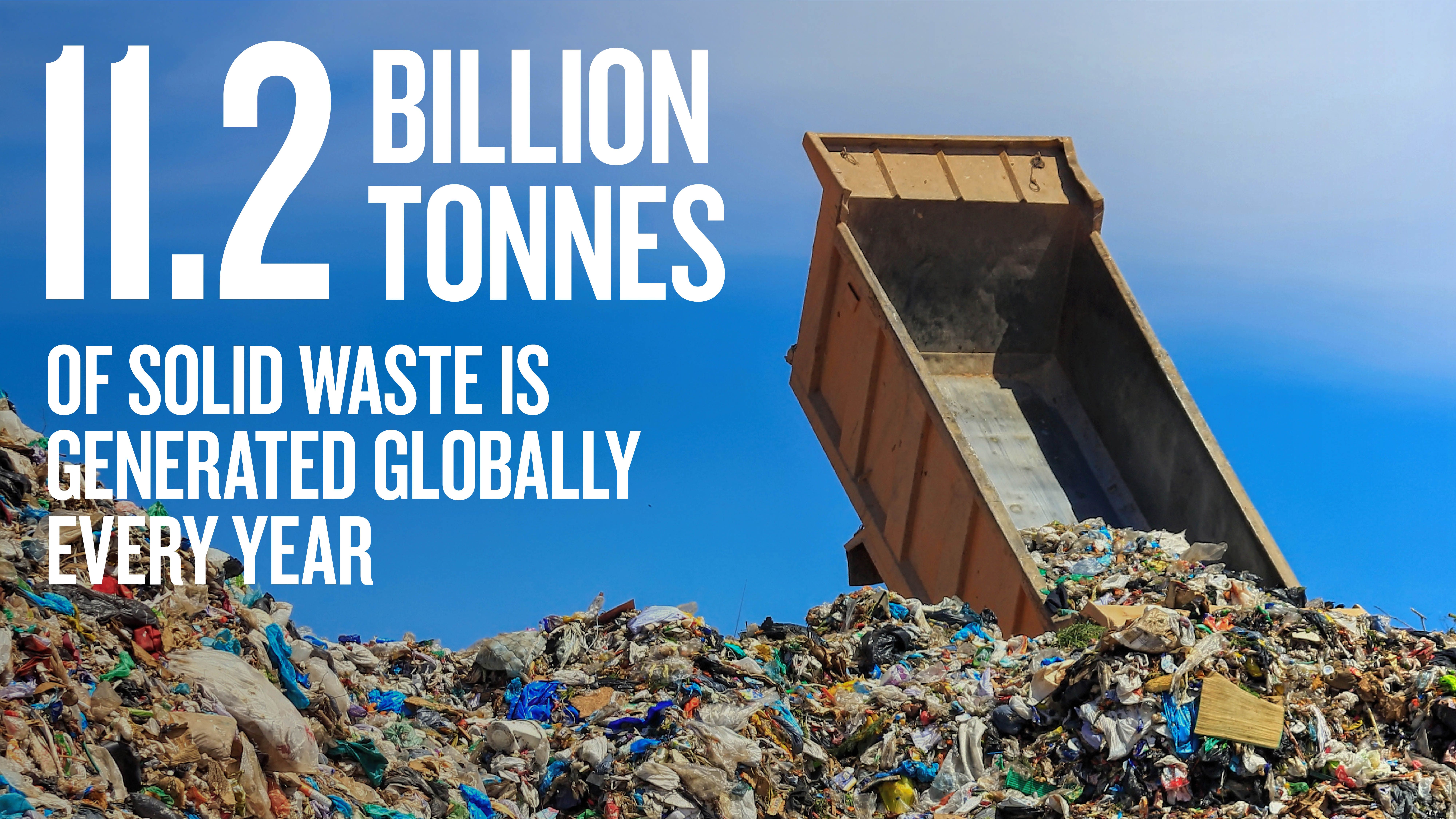
Waste from human and industry activity is estimated to account for 11.2 billion tonnes every year and managing this waste material is a growing challenge. In some parts of the world it is left in streets, sometimes openly burned, causing real hazards and problems for communities. It is also often dumped in rivers and ends up in our oceans, causing immense damage to the natural world.
Even where there are systems in place to collect and manage waste, it can often end up in landfill sites, with the biological and chemical breakdown of the waste negatively impacting the soil and some of it emitting methane, a greenhouse gas even more impactful on the climate than CO2.
It is best to recycle waste if it can be, but even waste that is non-recyclable can be further utilised and play an additional role.
Where waste and by-products cannot be managed technically or economically by prevention, reduction, reuse or recycling, the cement manufacturing process provides a more ecologically sustainable solution, compared to waste-to-energy, incineration, or landfill, thanks to the full energy recovery and material recycling.
GCCA and its member companies follow the common understanding that avoiding and reducing waste is the best way of dealing with waste, but where waste arises, co-processing offers the best solution for un-recyclable and un-reusable waste.

What is Co-processing?
Co-processing is the use of non-recyclable waste to fuel cement kilns
The cement making process requires high temperatures, and therefore can simultaneously safely and effectively treat and process, huge amounts of non-recyclable waste – recovering both its energy and recycling its mineral content. And importantly, this waste is used as a viable energy alternative to carbon intensive fossil fuels with which to heat our kilns.
The high temperatures in cement kilns (1450oC) that are needed to trigger the chemical reaction in limestone to create cement means that all potential harmful gases are eliminated, and the waste is safely destroyed.
Any remaining ashes are recycled into the building material compound itself, meaning there is no further waste residue to have to manage – a practical and valuable circular solution in action.

Co-processing is a win-win for society, for local communities, as well as for our planet and the environment.
Co-processing is a highly regulated process and operated in line with Best Available Technology/ Best Environmental Practices. Long retention times, high temperatures and strict control of chlorine levels mean cements kilns have lower emissions to air than waste incineration.
Did you know that enabling policies in the EU have resulted in the cement sector substituting an average 56% of its fuel with alternative sources in 2023. Some kilns already operate at above 90% substitution of fossil fuels, but in many others the substitution rate is still under 10%, making co-processing a significant opportunity for society and for the cement industry.
Co-processing can make a positive contribution in tackling the challenge of non-recyclable and non-reusable waste, delivering benefits for local communities, as well as for our planet and the environment.
Did you know?
Co-processing has a huge range of benefits – transforming non-recyclable waste into resources:
- Co-processing is both energy recovery and materials recycling
- It tackles the issue of non-recyclable waste and can address the problematic legacy of plastic waste
- Co-processing is recognised as environmentally sound management method and is highly regulated
- It helps reduce open waste burning or waste ending up in rivers and oceans
- It is safer and has higher environmental credentials than open waste burning and incineration
- It decreases the amount of landfill waste and reduces the amount of methane emissions from landfilling waste
- It reduces public investment costs that would otherwise be required for new dedicated landfilling facilities
- Co-processing allows for the reduction of fossil fuel consumption and demand for raw materials
- As well as the environmental benefits of not using and importing fossil from abroad, as is often the case, local value and job creation can be stimulated by waste management
- It can also be seen to increase energy security due to diversification of the energy matrix and increased use of locally sourced materials

How we can extend co-processing to be a truly local solution at a global scale?
The potential of co-processing can be enhanced further with efficient regulatory measures and policies, supporting its uptake across the world.
We need policymakers at national and international level to:
- Recognise co-processing as a sustainable waste management method – simultaneous energy recovery and material recycling – in waste policy frameworks.
- Incentivise collection, sorting and pre-treatment of waste at the municipal level to ensure quality and consistency of waste streams.
- Enable environmental permit-issuing at cement plants to get access to waste.
- Implement strong regulatory measures and compliance procedures to ensure implementation of Best Available Technologies (BAT).
- Include the share of materials which are effectively recycled through co-processing in a country’s national recycling targets.
- Introduce the fiscal incentives needed to support co-processing uptake in cement industry.
- Encourage knowledge transfer and policy alignment across regions to unlock the full potential of co-processing as a sustainable waste management solution.
- Provide fiscal incentives to level the playing field with other waste treatment and energy options.
- Create public-private partnerships for co-processing to allow risk-sharing and ensure long-term sustainability.